The Structural Gap
The EU has moved ESG from voluntary reporting to hard legal liability. EUDR, CSRD, PPWR, and the Green Claims Directive now require verifiable, batch-level evidence, not annual narratives or glossy PDFs. Large enterprises can absorb this shift. The mid-market can’t. That is the structural gap the Internet of Sustainability™ is built to exploit and resolve.
The Fortune 500 Reality: Absorbed Cost
Fortune 500 players already run full ESG and legal departments. They maintain global risk systems, buy enterprise platforms like SAP, Workiva, and Diligent, and keep Big Four audit teams on permanent retainer.
For them, ESG is simply another line item: €1M–€5M per year in compliance overhead that barely moves the needle. They pass the cost on, bury it in SG&A, and keep going.

The Mid-Tier Crisis: Same Rules, No Cushion
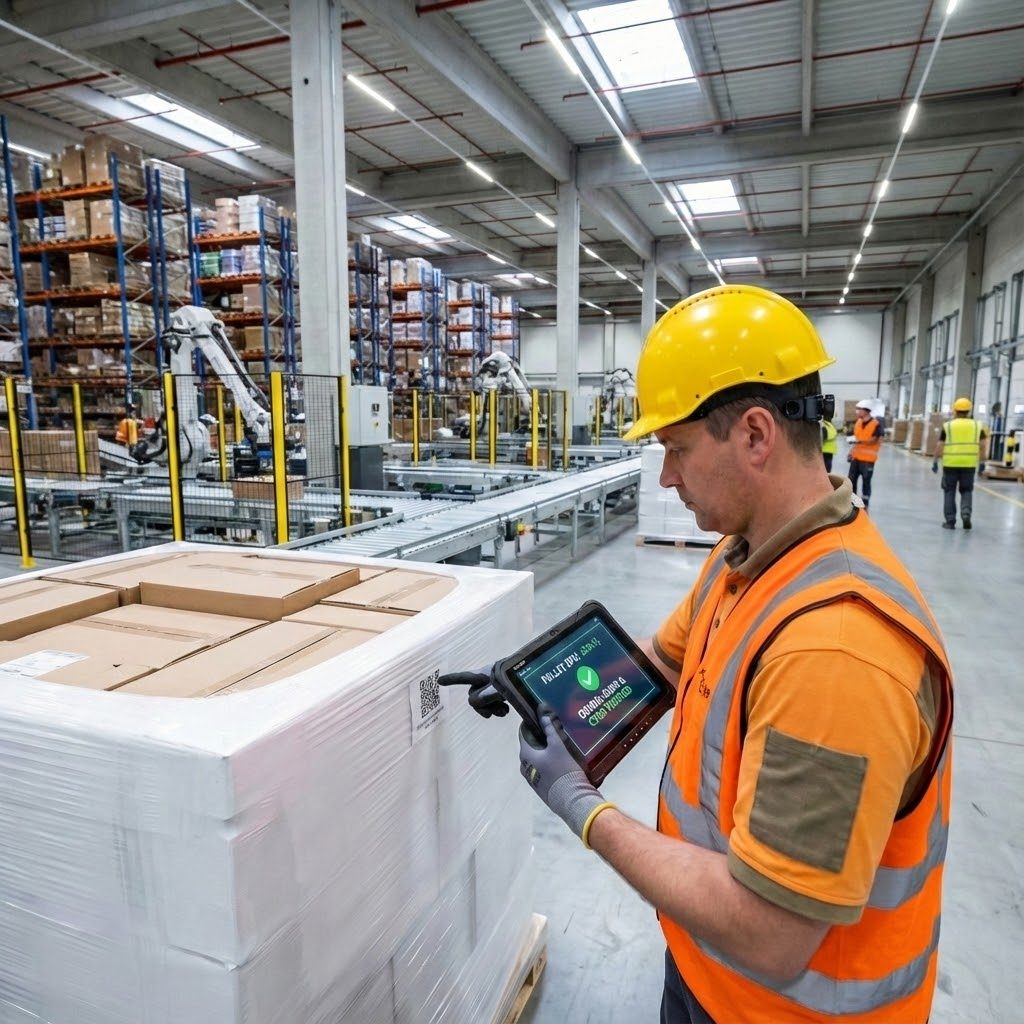
Mid-sized manufacturers and suppliers in the €50M–€1B revenue band face the exact same evidentiary requirements—but with none of the structural support.
Typical reality: 0–1 ESG staff, no in-house EUDR counsel, fragmented suppliers, and no traceability infrastructure. For them, ESG isn’t a branding exercise; it’s a potential solvency problem
€19.7B
Europe ESG & Sustainability advisory market
55,000
European companies
29%
ESG reporting CAGR
The Cost Asymmetry by the Numbers
Without automation, a mid-tier operator must spend €280k–€2M per year on consultants, audits, geolocation data, spreadsheets, and manual reconciliation just to stand still.
That spend is non-recoverable and non-scalable: it doesn’t increase revenue, it doesn’t improve operations, and it doesn’t compound into an asset. It is deadweight regulatory drag in a low-margin world.
The 2026–2027 Cut-Off
As enforcement timelines bite, the mid-market is staring at a real deadline. EUDR enforcement plus CSRD assurance requirements mean that “we’ll fix it later” stops working.
Without digitally verifiable evidence, companies face: refused shipments, product seizures, delisting by retailers, higher cost of capital, or outright loss of EU market access. Regulatory risk becomes existential.

Why Legacy ESG Tools Fail the Mid-Market
Spreadsheets, consultant-driven frameworks, and generic ESG platforms were built for annual reporting, not continuous proof. They require manual data wrangling, repeated questionnaires, and retrofitted evidence.
That architecture cannot keep pace with factory throughput or regulatory timelines, and it always lands as a fixed overhead project—exactly what the mid-tier cannot absorb
IoS as Structural Fix, Not Cosmetic Layer
The Internet of Sustainability tackles the gap at the unit-economic layer. Instead of asking mid-tier operators to build Fortune-500-style compliance departments, IoS converts
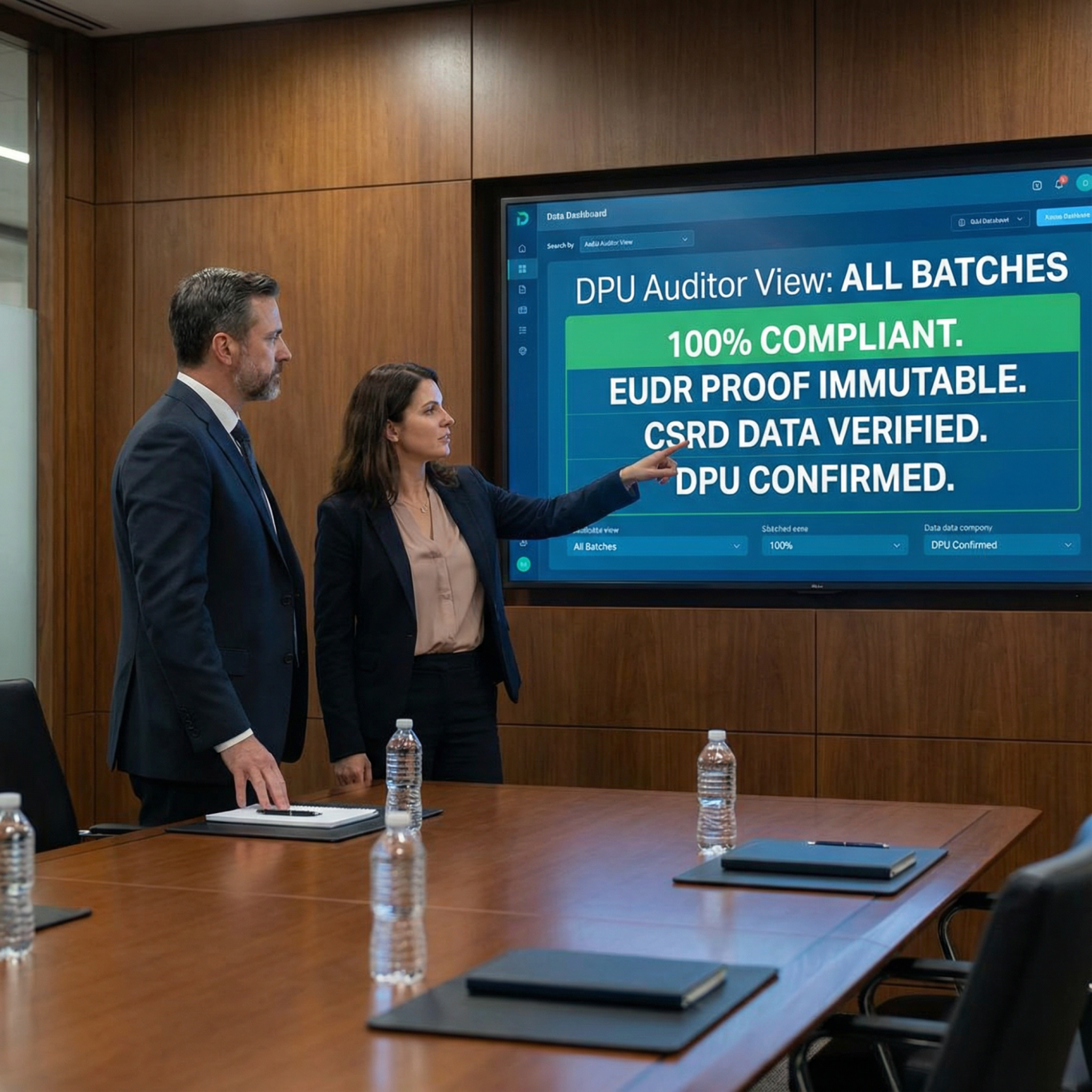
ESG into a per-unit, pay-as-you-go service. Each product or batch carries its own Digital Proof Unit (DPU), so proof scales with output, not with headcount or consultant hours. The asymmetry becomes an advantage instead of a penalty.